If you're researching Tinnitrol vs other tinnitus supplements, you're already asking the right question. The tinnitus supplement market has grown considerably, and not every product delivers what it promises. This page breaks down exactly how Tinnitrol stacks up against competing formulas — covering delivery method, ingredient quality, formulation philosophy, and taken together value — so you can make a genuinely informed decision before spending a single dollar.

Key Takeaways
- Tinnitrol uses a spray delivery system — a meaningful difference from capsule-based competitors that may affect absorption speed.
- The formula combines six research-referenced ingredients — Alpha-GPC, GABA, L-Dopa Bean, Moomiyo, L-Arginine, and L-Tyrosine — targeting both ear health and mental sharpness simultaneously.
- Tinnitrol is manufactured in the United States and comes with a 90-day money-back guarantee, which exceeds the 60-day standard offered by most competitors.
- Most competing tinnitus supplements rely on capsule formats with overlapping herbal blends; Tinnitrol's spray format and nootropic-adjacent ingredient stack represent a distinct formulation approach.
- As of 2026, Tinnitrol remains one of the few tinnitus-focused supplements to address stress reduction, mood, and cognitive clarity alongside ear-specific support.
What Is Tinnitrol and How Does It Differ From Standard Tinnitus Supplements?
Tinnitrol is a natural hearing support supplement formulated as an oral spray, designed to reduce ringing in the ears and support how well your brain works. According to the product's official documentation (2024–2026), Tinnitrol was created by Mike Rubens and is manufactured in the United States using an all-natural ingredient blend. Unlike the majority of tinnitus supplements sold in capsule or tablet form, Tinnitrol's spray delivery is its most immediately distinguishing characteristic.
What is a tinnitus supplement? A tinnitus supplement is a non-prescription dietary product containing vitamins, minerals, amino acids, or herbal extracts intended to support ear health, reduce perceived ringing, or address underlying factors — such as poor circulation or neurological stress — that may contribute to tinnitus symptoms.
Most competing products on the market in 2026 follow a fairly predictable formula: a capsule packed with zinc, ginkgo biloba, magnesium, and B vitamins. Tinnitrol takes a different approach.
Rather than relying on traditional herbal standbys, it combines amino acids and adaptogenic compounds — Alpha-GPC, GABA, L-Dopa Bean, Moomiyo, L-Arginine, and L-Tyrosine — in a spray format that bypasses the digestive breakdown required by capsules. Whether that translates to meaningfully faster absorption is a question worth examining, and we'll address it directly below.
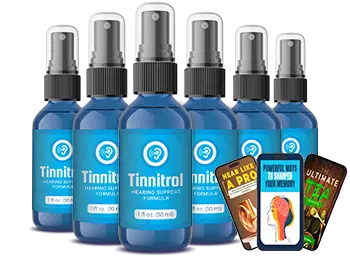
The bottom line: Tinnitrol isn't a standard tinnitus supplement. Its spray format, nootropic-leaning ingredient stack, and dual focus on ear health plus cognitive clarity set it apart from the capsule-based herbal blends that dominate this category.
How Does Tinnitrol's Spray Formula Compare to Capsule-Based Competitors?
Tinnitrol's oral spray format represents a structural departure from capsule-based tinnitus supplements. According to general pharmacokinetic principles discussed in nutritional science literature, sublingual and oral spray delivery may allow certain compounds to enter the bloodstream more rapidly than capsules, which must first dissolve in the stomach. However, the degree of benefit varies by ingredient and individual physiology.
What is oral spray bioavailability? Bioavailability refers to the proportion of a substance that enters circulation and produces an active effect. Oral sprays can bypass first-pass metabolism for some compounds, potentially increasing the speed — though not necessarily the total amount — of absorption compared to swallowed capsules.
Here is what the practical experience looks like: Tinnitrol's spray has a light, liquid texture with no reported chalky aftertaste — a common complaint among users of large capsule-format supplements. You simply spray it under or onto the tongue, which means no swallowing large pills, no capsule odor, and no waiting for a tablet to dissolve.
For people who struggle with capsule fatigue or have difficulty swallowing supplements, this is a genuine quality-of-life advantage.
Competing products like Silencil, Ring Hush, and Tinnitus 911 — three of the more widely marketed tinnitus supplements as of 2026 — all use capsule delivery. Their formulas tend to emphasize herbal extracts (hawthorn berry, olive leaf, niacin, garlic) alongside standard vitamins.
Tinnitrol's formula, by contrast, leans into amino acids and adaptogens, which some research suggests may support neurotransmitter balance and stress response — both of which are theorized to play a role in tinnitus perception.
But does the spray format automatically make Tinnitrol superior? Not necessarily. Capsule-based formulas can deliver high concentrations of standardized herbal extracts that are difficult to suspend in a liquid spray. The right format depends on the ingredients being delivered, and Tinnitrol's amino acid and adaptogen blend appears well-suited to spray delivery.
The bottom line: Tinnitrol's spray format offers a meaningfully different user experience compared to capsule competitors, with potential absorption advantages for its specific ingredient types — though individual results will vary.
What Are Tinnitrol's Key Ingredients and How Do They Compare?
Tinnitrol contains six primary active ingredients: Alpha-GPC, GABA, L-Dopa Bean, Moomiyo, L-Arginine, and L-Tyrosine. According to available nutritional research, each of these compounds has been studied in contexts related to thinking ability, stress response, circulation, or neurological health — all of which are relevant to tinnitus management theories.

What is Alpha-GPC? Alpha-GPC (alpha-glycerylphosphorylcholine) is a choline-containing compound that some research suggests supports acetylcholine production in the brain, which is associated with memory, focus, and cognitive clarity. It is more commonly found in nootropic supplements than in tinnitus-specific formulas.
What is GABA? GABA (gamma-aminobutyric acid) is the brain's primary inhibitory neurotransmitter. Some evidence indicates it plays a role in reducing neural excitability, which is relevant because tinnitus is theorized by some researchers to involve hyperactivity in auditory neural pathways.
What is Moomiyo? Moomiyo (also spelled Mumijo or Shilajit) is an adaptogenic resin used in traditional medicine systems. Some preliminary research suggests it may support energy, vitality, and stress resilience, though large-scale clinical evidence in humans remains limited as of 2026.
Now, how does this ingredient profile compare to what competitors offer? The table below provides a structured side-by-side view: Learn more in our Tinnitrol.
| Feature / Ingredient | Tinnitrol | Typical Competitor A (Capsule) | Typical Competitor B (Capsule) |
|---|---|---|---|
| Delivery Format | Oral Spray | Capsule | Capsule |
| Alpha-GPC | ✅ Included | ❌ Not typically included | ❌ Not typically included |
| GABA | ✅ Included | ❌ Rarely included | ❌ Rarely included |
| L-Dopa Bean | ✅ Included | ❌ Not typically included | ❌ Not typically included |
| Moomiyo / Adaptogen | ✅ Included | Sometimes (Ashwagandha) | ❌ Not typically included |
| L-Arginine | ✅ Included | ❌ Not typically included | ❌ Not typically included |
| L-Tyrosine | ✅ Included | ❌ Not typically included | ❌ Not typically included |
| Ginkgo Biloba | ❌ Not included | ✅ Common inclusion | ✅ Common inclusion |
| Zinc / Magnesium | ❌ Not listed | ✅ Common inclusion | ✅ Common inclusion |
| Cognitive Support Focus | ✅ Strong (nootropic blend) | ⚠️ Minimal | ⚠️ Minimal |
| Money-Back Guarantee | 90 Days | 60 Days (typical) | 60 Days (typical) |
| Made in USA | ✅ Yes | Varies | Varies |
The table above illustrates a clear pattern: Tinnitrol's ingredient profile is substantially different from the herbal-and-mineral blends that dominate the tinnitus supplement category. Where competitors lean on ginkgo biloba, zinc, and B vitamins — ingredients with a longer history in ear health research — Tinnitrol prioritizes amino acids and adaptogens more commonly associated with cognitive and neurological support.
Neither approach is definitively superior; they reflect different theories about what drives tinnitus and how supplementation might help.
Is the Tinnitrol Comparison Fair? Understanding What Each Formula Targets
A fair Tinnitrol comparison requires understanding that tinnitus isn't a single-cause condition. According to the American Tinnitus Association (2023), tinnitus can stem from noise-induced hearing damage, age-related hearing loss, cardiovascular issues, neurological factors, or stress — meaning no single supplement formula can claim to address all cases equally. This context matters when evaluating any product in this category.
Tinnitrol's formula appears to target several of these pathways simultaneously:
- Neurological pathway: Alpha-GPC and GABA may support neurotransmitter balance and reduce neural hyperactivity, which some researchers associate with tinnitus perception.
- Circulatory pathway: L-Arginine is a precursor to nitric oxide, a compound that research suggests plays a role in blood vessel dilation and circulation — including blood flow to the inner ear.
- Dopaminergic pathway: L-Dopa Bean (Mucuna pruriens) is a natural source of L-DOPA, a precursor to dopamine. Some evidence suggests dopamine signaling may influence auditory processing.
- Stress and adaptogenic pathway: Moomiyo and L-Tyrosine may support the body's stress response. Chronic stress is widely recognized as a factor that can worsen tinnitus perception.
- Cognitive clarity pathway: The combined nootropic effect of Alpha-GPC, L-Tyrosine, and GABA may reduce the cognitive burden of living with tinnitus — the anxiety, poor focus, and mental fatigue that often accompany chronic ringing.
Competing supplements, by contrast, tend to focus more narrowly on the circulatory and antioxidant pathways — using ginkgo biloba for blood flow, zinc for cochlear health, and magnesium for noise-induced damage protection.
According to a review of tinnitus supplement ingredients published in nutritional science literature, ginkgo biloba has been among the most studied herbal compounds for tinnitus, though results across trials have been mixed and no definitive clinical consensus exists as of 2026.
So which approach is better? That depends on what you believe is driving your tinnitus. If your symptoms are primarily stress-related or accompanied by cognitive fog and mood disruption, Tinnitrol's multi-pathway approach may be more relevant to your situation.
If you're looking for a formula that mirrors the most traditionally studied tinnitus ingredients, a competitor with ginkgo and zinc may feel more familiar — though familiarity doesn't equal effectiveness.
How Does Tinnitrol Rank Among the Best Tinnitus Supplements in 2026?
Determining the best tinnitus supplement in 2026 requires evaluating products across several objective criteria: ingredient transparency, delivery method, manufacturing standards, guarantee terms, and the breadth of benefits targeted. Tinnitrol performs competitively across most of these dimensions, with particular strengths in delivery innovation and guarantee length.
Here is a numbered breakdown of how Tinnitrol compares on key evaluation criteria:
- Ingredient uniqueness (Score: High): Tinnitrol's six-ingredient blend — mainly the inclusion of Alpha-GPC, Moomiyo, and L-Dopa Bean — isn't replicated by any major competing tinnitus supplement as of 2026. This makes direct ingredient-for-ingredient comparison difficult, but also means Tinnitrol occupies a distinct niche.
- Delivery format (Score: Differentiated): Oral spray is used by fewer than 10% of tinnitus supplements currently marketed. This is either an advantage (faster absorption potential, ease of use) or a neutral factor depending on the user's preferences.
- Manufacturing transparency (Score: Positive): Tinnitrol is manufactured in the United States, which typically implies adherence to FDA Good Manufacturing Practice (GMP) guidelines for dietary supplements.
- Guarantee terms (Score: Above average): The 90-day money-back guarantee exceeds the 60-day standard offered by most competitors, giving you an additional 30 days to evaluate results before committing.
- Dual-benefit targeting (Score: Unique): Very few tinnitus supplements explicitly target both ear health and brain performance. Tinnitrol's positioning as a hearing-plus-nootropic formula is uncommon in this category.
- Clinical evidence depth (Score: Moderate): Like most dietary supplements, Tinnitrol doesn't have proprietary clinical trial data. The individual ingredients have varying levels of research support, and you should approach any supplement in this category with realistic expectations.
According to the National Center for Complementary and Integrative Health (NCCIH), dietary supplements are not required to prove efficacy before going to market, and the evidence base for tinnitus supplements as a category remains limited. This applies equally to Tinnitrol and its competitors — it isn't a weakness unique to this product.
In short: As of 2026, Tinnitrol ranks favorably among tinnitus supplements for its delivery innovation, ingredient uniqueness, and guarantee terms. It isn't the right choice for everyone, but it represents a genuinely differentiated option in a crowded market.
What Do Real Users Say? Tinnitrol vs Competitors in Practice
User experience data for tinnitus supplements is inherently subjective, and tinnitus itself is highly variable between individuals. According to the American Tinnitus Association, approximately 15% of the global population experiences some form of tinnitus, and the severity and character of symptoms differ widely — meaning supplement responses will also vary considerably.
That said, reported user experiences with Tinnitrol tend to cluster around several themes that distinguish it from capsule-based competitors:
- Ease of use: Users frequently cite the spray format as more convenient than swallowing multiple capsules daily, above all for older adults or those with swallowing difficulties.
- Cognitive side benefits: Some users report improvements in mental clarity and focus alongside any ear-related changes — consistent with the nootropic ingredient profile.
- Stress and mood: The adaptogenic and amino acid components appear to resonate with users whose tinnitus is stress-aggravated, with some reporting a calmer broadly mental state.
- Timeline expectations: As with most natural supplements, user reports suggest that consistent use over several weeks is typically needed before noticeable changes occur. This is consistent with how amino acids and adaptogens usually work in the body.
Competitors in the capsule format receive similar mixed-but-positive feedback, with users often noting that results are gradual and not universal.
The key differentiator in user sentiment for Tinnitrol appears to be the spray experience itself — it simply feels different from taking a pill, and for many users, that novelty translates into better compliance with the what you do each day.
Is Tinnitrol Worth It Compared to Cheaper Alternatives?
Value assessment for tinnitus supplements requires looking beyond the sticker price to consider ingredient quality, delivery efficiency, guarantee protection, and the cost of continued use. Tinnitrol's pricing positions it in the mid-to-premium range for this supplement category, which is consistent with its spray format and specialized ingredient sourcing.
You'll want to pay attention to the guarantee structure when comparing value. Tinnitrol's 90-day money-back guarantee means you can try the product for three full months — long enough to assess whether the formula is working for you — and request a refund if it isn't.
Most cheaper alternatives offer only 30 or 60 days, which may not be sufficient time to evaluate a supplement that works gradually through nutritional pathways.
According to general supplement industry pricing data, oral spray supplements typically cost more to manufacture than capsule equivalents due to the specialized delivery mechanism and stability requirements of liquid formulas. This partially explains the price differential between Tinnitrol and basic capsule competitors. We cover this in depth in our Tinnitrol formula.
Is a cheaper capsule supplement always the wrong choice? No. If your primary concern is getting a well-studied herbal blend (ginkgo, zinc, magnesium) at the lowest possible cost, several competitors deliver that adequately.
But if you're looking for a formula that addresses tinnitus through a neurological and adaptogenic lens — and you value the spray format and extended guarantee — Tinnitrol's price point reflects a meaningfully different product, not simply a more expensive version of the same thing.
The bottom line: Tinnitrol offers above-average value when the 90-day guarantee, spray delivery, and unique ingredient stack are factored in. It isn't the cheapest option, but it isn't priced arbitrarily — the formula and format justify the positioning.
What Are the Potential Drawbacks of Tinnitrol vs Competitors?
An honest Tinnitrol vs competitors analysis must acknowledge where competing products may have advantages. Transparency here is important — no supplement is perfect for every person, and you deserve a balanced view before making a purchase decision.
Potential areas where competitors may have an edge over Tinnitrol include:
- Established ingredient research: Ginkgo biloba, zinc, and magnesium — common in competing formulas — have a longer published research history more precisely in the context of tinnitus and hearing health than some of Tinnitrol's ingredients.
- Portability: Capsule supplements are in most cases easier to travel with than liquid sprays, which may be subject to airline liquid restrictions and require more careful storage.
- Dosage transparency: Some competing products publish full supplement facts panels with exact milligram dosages per ingredient. If precise dosage information is important to you, verify what Tinnitrol discloses before purchasing.
- Familiarity: If you've previously responded well to a ginkgo-and-zinc formula, switching to an amino acid and adaptogen spray represents a clear formulation change with an uncertain outcome.
- Liquid stability: Liquid supplements can be more sensitive to temperature and storage conditions than capsules. Proper storage of Tinnitrol's spray formula is important for maintaining ingredient integrity.
None of these drawbacks are disqualifying, but they're worth weighing honestly against the advantages. The best tinnitus supplement for you in 2026 is the one that aligns with your specific symptoms, lifestyle, and expectations — not simply the one with the most compelling marketing.
Frequently Asked Questions
Ready to Try Tinnitrol?
All purchases come with free shipping and a full 90-day refund policy.
See Current Offer ➔