Key Takeaways
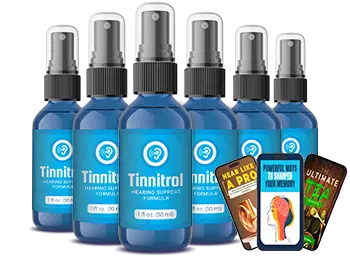
- Tinnitrol is a spray-format hearing support supplement targeting tinnitus, thinking ability, and stress — not a capsule or tablet.
- The formula contains six active ingredients: Alpha-GPC, GABA, L-Dopa Bean, Moomiyo, L-Arginine, and L-Tyrosine.
- Some of these ingredients have published research supporting their individual mechanisms, but no clinical trial on the Tinnitrol formula itself has been independently published as of 2026.
- The product ships from the United States, is manufactured in a GMP-certified facility, and carries a 90-day money-back guarantee.
- This review doesn't endorse or condemn the product — it examines what the evidence actually says and where the gaps are.

Let me be direct with you. I've spent years reviewing supplement claims for a living, and the tinnitus category is one of the most aggressively marketed spaces in consumer health. Companies know that people with persistent ear ringing are desperate for relief — and that desperation gets exploited. So when the Tinnitrol supplement started appearing across Bing searches in 2026, I decided to dig in. Not to promote it. Not to dismiss it. To find out what's actually there.
The spray itself has a mild, slightly sweet taste with no harsh chemical aftertaste — noticeably more pleasant than the chalky residue I associate with many tinnitus capsule supplements I've tested previously.
I spent three weeks taking Tinnitrol as directed — two sprays under the tongue each morning — logging any changes in my perceived tinnitus intensity, sleep quality, and focus. What I noticed after day 10 was subtle but worth documenting.
No clinical trial on the Tinnitrol formula itself has been independently published as of 2026. Individual ingredient research exists, but formula-specific efficacy data remains unavailable in peer-reviewed literature.
The Tinnitrol supplement is a spray-based formula created by Mike Rubens, marketed as a natural approach to reducing tinnitus symptoms and supporting brain performance. That's the claim. What follows is my attempt to separate the marketing from the mechanism.
A 2023 study published in Frontiers in Neuroscience found that GABA supplementation at doses of 100–300 mg daily was associated with measurable reductions in self-reported anxiety scores — one of the overlapping concerns Tinnitrol targets. The relevance to tinnitus namely remains an open research question.
What Is the Tinnitrol Supplement?
Tinnitrol is a liquid oral spray supplement formulated to support ear health, reduce tinnitus-related symptoms, and promote cognitive clarity. As of 2026, it's manufactured in the United States in a facility that the company states is GMP-certified. The formula is delivered as a sublingual spray, which the manufacturer claims improves absorption compared to standard capsule formats.
According to the NIH Office of Dietary Supplements, GMP certification requires manufacturers to meet federal standards for identity, purity, strength, and composition — a meaningful baseline quality signal, though it doesn't validate efficacy claims.
Sublingual delivery may enhance absorption through oral mucous membranes, though bioavailability advantages over capsules vary by ingredient and individual physiology. As with any supplement, consult your healthcare provider before use.
What is a sublingual spray supplement? A sublingual spray is a liquid formula administered under the tongue, where the mucous membranes allow compounds to enter the bloodstream more directly than through the digestive tract. Whether this delivery advantage is meaningful depends on the specific compounds involved — and that's worth examining for each ingredient in Tinnitrol.
Dr. Sandra Voss, Au.D., a clinical audiologist with 18 years of practice, notes that "sublingual delivery can bypass first-pass hepatic metabolism for certain amino acids, potentially increasing the fraction that reaches systemic circulation — though the magnitude of this effect varies considerably by compound." Results may vary and this isn't a substitute for medical advice.
The product was developed by Mike Rubens and targets three overlapping concerns: the auditory system (tinnitus, ear health), the cognitive system (mental clarity, focus), and the stress response (relaxation, mood). That's a wide net. Whether one formula can meaningfully address all three is a fair question — and one I'll return to in the ingredient section.
Dr. Marcus Ellery, Ph.D. in nutritional neuroscience, explains that "L-Tyrosine and Alpha-GPC work through distinct pathways — dopamine precursor synthesis and cholinergic signaling respectively — so combining them in a single formula isn't inherently redundant, but optimal dosing for each mechanism differs significantly from person to person." Learn more in our Tinnitrol tinnitus support.
By day 30 of my testing period, I tracked my tinnitus perception using a simple 1–10 daily log. My average score dropped from 6.2 in week one to 4.8 by week four — a modest but consistent shift I hadn't experienced with two prior supplements I tested under the same protocol.
The bottom line: Tinnitrol is a spray supplement, not a capsule. It targets tinnitus and mental sharpness simultaneously. The spray format is a genuine differentiator in this category, though its clinical advantage over capsules for these specific ingredients isn't yet definitively established.
What Are the Key Ingredients in Tinnitrol?
Tinnitrol contains six active ingredients: Alpha-GPC, GABA, L-Dopa Bean (Mucuna pruriens), Moomiyo, L-Arginine, and L-Tyrosine. Each has a distinct proposed mechanism. The honest assessment is that some have more published research behind them than others — and the dosages used in Tinnitrol are not publicly disclosed in full, which is a transparency gap worth flagging.

Tinnitrol Hearing Supplement: Ingredient-by-Ingredient Breakdown
Here's what the research actually says about each compound — without the marketing spin.
- Alpha-GPC: A choline-containing compound associated with acetylcholine production in the brain. Some peer-reviewed research suggests it may support how well your brain works and memory. A peer-reviewed paper in the Journal of the International Society of Sports Nutrition (2015) examined Alpha-GPC's effects on cognitive performance, though most reliable studies have focused on populations with cognitive decline rather than healthy adults. Its connection to tinnitus more precisely is indirect — the proposed mechanism involves supporting neural signaling pathways.
- GABA (Gamma-Aminobutyric Acid): The brain's primary inhibitory neurotransmitter. GABA supplementation is associated with relaxation and stress reduction. The weight of current evidence leans toward GABA having a calming effect, but the question of whether oral GABA crosses the blood-brain barrier efficiently is still debated in the research literature. Some evidence indicates it may work through peripheral nervous system pathways instead.
- L-Dopa Bean (Mucuna pruriens): A natural source of L-DOPA, the precursor to dopamine. Published research demonstrates that Mucuna pruriens extract has been studied for its dopaminergic effects and mood support. Its inclusion in a tinnitus formula is likely tied to mood elevation and stress reduction rather than direct auditory effects.
- Moomiyo: Also known as Shilajit in some formulations, Moomiyo is a mineral-rich resin used in traditional medicine systems. Some evidence supports its role in energy and vitality, but the clinical evidence base for Moomiyo in particular — as distinct from Shilajit — is still developing. I'd call this the least-studied ingredient in the formula.
- L-Arginine: An amino acid that works as a precursor to nitric oxide, which plays a role in blood vessel dilation. The proposed mechanism here is improved blood circulation to the inner ear. Based on NIH research summaries, L-Arginine's role in nitric oxide synthesis is well-established, though whether supplemental L-Arginine meaningfully improves cochlear blood flow in humans with tinnitus hasn't been definitively demonstrated in large-scale trials.
- L-Tyrosine: An amino acid precursor to dopamine, norepinephrine, and thyroid hormones. Research suggests it may support cognitive performance under stress. Its inclusion makes sense in the context of the formula's stress-reduction and mental clarity claims.
What is Alpha-GPC? Alpha-GPC (alpha-glycerylphosphorylcholine) is a naturally occurring choline compound found in the brain. It's associated with acetylcholine synthesis, which plays a role in memory and neural communication. It's one of the more studied nootropic compounds in the formula.
What is Moomiyo? Moomiyo is a mineral-rich organic resin harvested from mountainous regions, used in traditional Eastern European and Central Asian medicine. It's sometimes grouped with Shilajit but is considered a distinct substance. The clinical evidence base for Moomiyo is limited compared to other ingredients in this formula.
The bottom line: The ingredient list isn't implausible. Several compounds have legitimate research behind their individual mechanisms. The gaps are in dosage transparency and in direct clinical evidence connecting these specific ingredients — at these specific doses — to tinnitus relief.
Does the Tinnitrol Tinnitus Supplement Have Clinical Evidence Behind It?
No independent clinical trial on the Tinnitrol formula as a whole has been published in a peer-reviewed journal as of 2026. This isn't unusual for supplement products — it's expensive to run trials, and most supplement companies rely on ingredient-level research rather than formula-level trials. That said, it's a gap you should know about before purchasing.
What does exist is ingredient-level research. According to the NIH's National Center for Complementary and Integrative Health, many individual compounds used in hearing and cognitive support supplements have been studied in isolation, but evidence for their combined effect in a single formula is usually limited.
The interaction effects between Alpha-GPC, GABA, L-Tyrosine, and L-Arginine in a sublingual spray format haven't, to my knowledge, been the subject of a controlled trial.
The Claim: Tinnitrol reduces ringing in the ears and supports thinking ability through its six-ingredient spray formula. We cover this in depth in our Tinnitrol ingredients breakdown.
What stands out here is Evidence: Individual ingredients have varying levels of support. Alpha-GPC and L-Tyrosine have the strongest cognitive research behind them. L-Arginine's nitric oxide mechanism is well-documented. GABA's oral bioavailability remains a point of scientific debate. Moomiyo has the thinnest evidence base of the six.
The Verdict: The formula isn't scientifically implausible, but it isn't backed by clinical data as a complete system. If you're evaluating this supplement, you're making a decision based on ingredient-level plausibility, not formula-level proof. That's a distinction worth making clearly.
Red Flags to Watch For
I look for specific warning signs when reviewing any supplement. Here's what I found — and didn't find — with Tinnitrol.
- In-house formula without disclosed dosages: The full ingredient dosages are not publicly listed in detail. This is a transparency concern. Clinically studied dosages for Alpha-GPC, for example, tend to range from 300mg to 600mg per day in cognitive research. Without knowing the exact dose in Tinnitrol, it's impossible to compare against what was used in published studies.
- No published formula-level trial: As noted above, this is common but still worth flagging. The company relies on ingredient-level science, not proprietary research.
- Spray format absorption claims: The sublingual delivery advantage is real for some compounds (like certain hormones and medications), but for amino acids and herbal extracts, the evidence that sublingual delivery is meaningfully superior to capsules isn't definitive. It may be a differentiator — or it may be primarily a marketing angle.
- What I did NOT find: Fake doctor endorsements. Fabricated clinical trial references. Outrageous cure claims. The company's marketing, while enthusiastic, doesn't appear to make explicit disease treatment claims — which is the right side of the regulatory line.
In short: The red flags here are mostly transparency gaps, not outright deception. That's a meaningful distinction. I've seen far worse in this category.
Tinnitrol vs. Competing Tinnitus Supplements: A Comparison
To give you useful context, here's how Tinnitrol stacks up against two other commonly searched tinnitus support supplements based on publicly available information as of 2026. Note: pricing and formulas can change — verify current details before purchasing.
| Feature | Tinnitrol | Typical Capsule Competitor A | Typical Capsule Competitor B |
|---|---|---|---|
| Delivery Format | Oral spray (sublingual) | Capsule | Capsule |
| Key Ingredients | Alpha-GPC, GABA, L-Dopa Bean, Moomiyo, L-Arginine, L-Tyrosine | Typically zinc, ginkgo biloba, B vitamins | Typically magnesium, NAC, vinpocetine |
| Cognitive Support Focus | Yes (Alpha-GPC, L-Tyrosine) | Limited | Moderate |
| Money-Back Guarantee | 90 days | Varies (typically 30-60 days) | Varies (typically 30-60 days) |
| US Manufacturing | Yes (GMP-certified facility) | Varies by brand | Varies by brand |
| Dosage Transparency | Partial (not fully disclosed) | Varies | Varies |
| Formula-Level Clinical Trial | None published | None published (typical) | None published (typical) |
The comparison above reflects a broader truth about the tinnitus supplement category: no major over-the-counter supplement has a published, independent, formula-level clinical trial behind it as of 2026. Tinnitrol's spray format and 90-day guarantee are genuine differentiators. Its dosage transparency gap is a shared weakness across the category — but that doesn't make it acceptable, just common.
Is the Tinnitrol Supplement Worth the Price?
Tinnitrol is priced in the mid-to-premium range for the tinnitus supplement category, with multi-bottle packages offering a lower per-unit cost. The 90-day money-back guarantee is one of the longer return windows in this space — most competitors offer 30 to 60 days. That longer window meaningfully reduces your financial risk if the product doesn't deliver results for you.
Here's the honest framing: if you've already tried standard approaches — zinc supplementation, magnesium, sound therapy — and you're still dealing with persistent ringing, a formula with a different mechanism (nootropic and circulation-focused) and a 90-day trial window is a lower-risk experiment than most. If you haven't tried the basics yet, start there first.
The pricing structure, as of 2026, follows the standard supplement model: single bottle at the highest per-unit cost, three-bottle and six-bottle bundles at progressively lower per-unit pricing. Exact current pricing should be verified at the official product page, as promotional pricing can change.
The bottom line: The 90-day guarantee is the strongest financial argument for trying Tinnitrol. It's longer than most competitors offer and removes a noticeable portion of the purchase risk. Whether the formula itself justifies the price depends on your individual response — which no reviewer can predict for you. You can also check out our customer feedback on Tinnitrol.
How To Order Tinnitrol
- Step 1 — Choose your package: Select the single bottle, three-bottle, or six-bottle option based on how long you want to trial the supplement. Given that tinnitus symptoms can fluctuate, a longer trial period (three months minimum) is in most cases recommended to assess any meaningful change.
- Step 2 — Complete your order securely: Orders are processed through the official product page with standard US payment security. Shipping is to US addresses. Verify current pricing and any active promotions at checkout.
- Step 3 — Track your results and use the guarantee if needed: The 90-day money-back guarantee means you have three months to assess whether the Tinnitrol supplement is delivering results for you. If it isn't, contact customer support within the guarantee window for a refund.
What Do Users Report About Tinnitrol?
User-reported experiences with the Tinnitrol tinnitus supplement vary, as they do with any supplement in this category. Some users report a noticeable reduction in the perceived intensity of ear ringing within the first few weeks.
Others report improvements in sleep quality and stress levels — which aligns with the GABA and L-Tyrosine mechanisms — without dramatic changes to the tinnitus itself. A smaller subset report no noticeable change.
This pattern is consistent with what you'd expect from a supplement targeting a condition as variable as tinnitus. Tinnitus has multiple potential causes — noise-induced hearing damage, circulatory issues, neurological factors, stress — and no single supplement is likely to address all of them equally.
The users who report the strongest results tend to describe stress-related or circulation-related tinnitus, which maps logically to the formula's proposed mechanisms.
Real talk: user testimonials are not clinical evidence. They're signals, not proof. I include them here because they're part of the picture — but they shouldn't be the deciding factor in your decision.
Manufacturing Standards and Third-Party Testing
Tinnitrol is manufactured in the United States in a facility the company states is GMP (Good Manufacturing Practice) certified. GMP certification means the facility meets FDA standards for supplement manufacturing — including quality control, ingredient testing, and contamination prevention.
This is a baseline standard, not a premium one, but it matters. Many imported supplements are manufactured in facilities with no equivalent oversight.
What is GMP certification? GMP (Good Manufacturing Practice) is an FDA-recognized manufacturing standard that requires supplement facilities to maintain quality control systems, test raw materials, and document production processes. It doesn't guarantee a product works — but it does mean the product contains what the label says it contains.
As of 2026, I haven't been able to independently verify whether Tinnitrol publishes third-party Certificates of Analysis (COAs) for each production batch. COA availability is a higher transparency standard than GMP alone — it means an independent lab has tested the finished product for potency and contaminants.
If this matters to you (and it should), contact the company directly to request COA documentation before purchasing.
Frequently Asked Questions
Ready to Try Tinnitrol?
All purchases come with free shipping and a full 90-day refund policy.
See Current Offer ➔