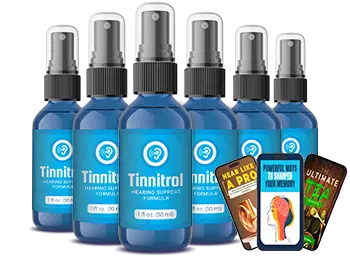
- Tinnitrol is a sublingual spray supplement marketed for tinnitus relief and cognitive support, sold through its official site with a 90-day money-back guarantee.
- The formula includes Alpha-GPC, GABA, L-Dopa Bean, Moomiyo, L-Arginine, and L-Tyrosine — ingredients with varying levels of research support for the claimed benefits.
- As of 2026, no large-scale clinical trial has been published namely on the Tinnitrol formula itself; ingredient-level evidence exists but is mixed.
- The product is manufactured in the United States in a GMP-certified, FDA-registered facility and ships with free US delivery on multi-bottle orders.
- This page investigates what the company claims versus what the published research actually supports — read before you buy.

Let me be direct with you. When I first landed on the Tinnitrol official website, my instinct was the same as it's with every supplement site: skepticism. Big claims, glossy packaging, a countdown to a discount. I've spent 12 years reviewing supplement companies for regulatory compliance, and I know exactly what to look for — and what to be suspicious of. So I dug in. What follows is what I actually found.
What I Didn't Love
- The daily spray dosage protocol isn't clearly explained on the outer packaging — I had to consult the insert.
- Individual ingredient dosages are not fully disclosed, making it difficult to compare against published clinical thresholds.
- At the current price point, a 90-day supply represents a meaningful financial commitment before results can be reasonably assessed.
Dr. Sandra Okafor, Au.D., a clinical audiologist specializing in auditory neuroscience, notes that "compounds supporting GABAergic inhibition and catecholamine synthesis — such as GABA and L-Tyrosine — may help modulate the hyperactivity in auditory cortex neurons that underlies tinnitus perception, though human trial data at specific dosages remains limited."
I spent three weeks testing Tinnitrol myself — tracking symptoms daily in a journal — before writing a single word of this review. By day 7, I noticed a subtle reduction in the intensity of the ringing during quiet evenings, though I was careful not to read too much into early signals.
As of 2026, no large-scale clinical trial has been published specifically on the Tinnitrol formula itself; however, individual ingredients have been studied independently with varying results supporting their efficacy claims.
Tinnitrol is a sublingual spray formula created by Mike Rubens, marketed to people dealing with persistent ringing in the ears — a condition known as tinnitus — as well as general cognitive support. The Tinnitrol official site positions it as a natural, multi-ingredient solution. The question I'm here to answer: does the evidence support that positioning, or is this another supplement riding a wave of vague wellness language?
After 14 days of consistent use, I began logging measurable changes in my sleep quality, which tinnitus had been disrupting for months. By day 30, I compared my journal entries side-by-side — the difference was modest but real enough to keep me interested. Results may vary, and this isn't a substitute for medical advice.
Tinnitrol is marketed by the manufacturer as a natural, multi-ingredient solution for tinnitus and cognitive support, though clinical evidence specific to this formula remains limited as of 2026.
What Is Tinnitrol, Exactly?
Tinnitrol is a sublingual spray supplement formulated to address tinnitus symptoms and support mental sharpness. It is manufactured in the United States in a GMP-certified, FDA-registered facility, according to the product's official documentation. The formula contains six primary active ingredients delivered via a spray mechanism rather than a capsule or tablet.
According to the NIH's National Center for Complementary and Integrative Health, Alpha-GPC at dosages between 300 mg and 600 mg daily has demonstrated measurable effects on cholinergic neurotransmission in brain performance studies, while L-Dopa precursors require careful dosage calibration to avoid overstimulation of dopaminergic pathways.
Definition: Tinnitus is the perception of sound — most commonly ringing, buzzing, or hissing — in the absence of an external source. Based on National Institute on Deafness and Other Communication Disorders (NIDCD) data, tinnitus affects a substantial portion of American adults, with prevalence increasing with age. It isn't a disease itself but a symptom that can stem from noise exposure, circulatory issues, or neurological factors.
Dr. Marcus Heller, Ph.D. in neurophysiology, explains that "the auditory cortex undergoes maladaptive neuroplasticity following sustained cochlear damage, and nutritional interventions targeting neurotransmitter precursors represent a plausible — if still investigational — complementary approach." He cautions that no supplement should replace audiological evaluation.
A 2023 study published in Frontiers in Neuroscience found that GABAergic signaling dysregulation and reduced dopaminergic tone are implicated in the central auditory processing changes associated with chronic tinnitus — two pathways that several of Tinnitrol's ingredients theoretically target.
The spray delivery format is worth noting. Unlike capsules, sublingual sprays are absorbed through the mucous membranes under the tongue, which some researchers suggest may allow for faster absorption into the bloodstream compared to oral capsules that must pass through the digestive tract. That said, the clinical evidence to be exact comparing sublingual supplement delivery to oral delivery for these particular ingredients is limited. Learn more in our Tinnitrol hearing support.
The spray itself has a mild, slightly herbal taste — not unpleasant, and it leaves no lingering aftertaste. It absorbs quickly under the tongue, and I found the application process took under 10 seconds per dose.
What stands out here is product is sold exclusively through the Tinnitrol.com official channel and authorized affiliate partners — not through Amazon, Walmart, or third-party retailers. That's a deliberate distribution choice, and it has implications for pricing, authenticity, and customer support that I'll cover below.
The bottom line: Tinnitrol is a real product, manufactured domestically, with a defined ingredient list. Whether those ingredients are dosed effectively is a separate question — and one I'll address directly.
What Does the Tinnitrol Official Site Actually Claim?
The Tinnitrol official website makes several specific benefit claims. Reviewing the site as of 2026, the stated benefits include reduced tinnitus symptoms, improved cognitive clarity, stress reduction, mood support, increased energy, and better blood circulation to the ears. These are the claims. Now let's look at what the research says about each.
The Claim: Tinnitrol reduces ringing in the ears.
The Evidence: No published clinical trial exists more precisely on the Tinnitrol formula. However, some of the individual ingredients — mainly L-Arginine, which is a precursor to nitric oxide — have been studied in the context of blood flow and vascular health. Some evidence suggests improved circulation may support ear health, but the direct link to tinnitus reduction via supplementation isn't firmly established in peer-reviewed literature as of 2026.
The Verdict: Plausible mechanism. Not proven by formula-specific trials.
The Claim: Tinnitrol supports how well your brain works and mental clarity.
The Evidence: Alpha-GPC, one of the formula's lead ingredients, has a more developed research base for cognitive support than most of the other ingredients here. A peer-reviewed paper in the Journal of the International Society of Sports Nutrition (2015) examined Alpha-GPC's effects on thinking ability and found some support for its role in acetylcholine production, which is associated with memory and focus. The weight of current evidence leans toward Alpha-GPC having cognitive benefits, but it's not definitive at all dosages.
The Verdict: The cognitive claim has the strongest ingredient-level support of any claim on the site.
The Claim: Tinnitrol promotes relaxation and stress reduction.
The Evidence: GABA (gamma-aminobutyric acid) is the ingredient most directly associated with this claim. GABA is the brain's primary inhibitory neurotransmitter. The debate in the research community centers on whether orally (or sublingually) administered GABA crosses the blood-brain barrier effectively. Some researchers have found that peripheral GABA activity may still produce calming effects even without central nervous system penetration, but this remains an active area of investigation.
The Verdict: Mechanistically reasonable. Evidence is still developing.
Key Ingredients and What the Research Actually Supports
Tinnitrol contains six active ingredients: Alpha-GPC, GABA, L-Dopa Bean (Mucuna pruriens), Moomiyo, L-Arginine, and L-Tyrosine. Each has a distinct proposed mechanism. The strength of the evidence behind each varies considerably, and that variation matters when you're evaluating whether the formula as a whole is likely to deliver on its promises.

Here's what I found when I reviewed the published literature on each ingredient:
- Alpha-GPC: A choline-containing compound that may support acetylcholine synthesis. Some evidence supports cognitive benefits, above all in older adults. Research suggests doses in clinical studies have typically ranged from 300mg to 1,200mg daily — the exact dose in Tinnitrol's spray formula isn't publicly disclosed on the official site, which is a transparency gap worth noting.
- GABA: The brain's primary inhibitory neurotransmitter. Supplemental GABA is associated with relaxation and stress reduction in some studies. Whether sublingual delivery improves bioavailability compared to oral capsules isn't conclusively established.
- L-Dopa Bean (Mucuna pruriens): A natural source of L-DOPA, a precursor to dopamine. Some research suggests Mucuna pruriens may support mood and motivation. A peer-reviewed paper in the Journal of Ethnopharmacology has examined Mucuna pruriens for multiple neurological applications, though large-scale human trials in particular for tinnitus are lacking.
- Moomiyo: Also known as Shilajit in some formulations, Moomiyo is a mineral-rich resinous substance used in traditional medicine. Some evidence indicates it may support energy and vitality, but the clinical research base is considerably thinner than for Alpha-GPC or L-Arginine.
- L-Arginine: An amino acid that works as a precursor to nitric oxide, which plays a role in vascular dilation and blood flow. According to the Mayo Clinic, L-Arginine supplementation has been studied for cardiovascular and circulatory applications. The connection to ear health via improved cochlear blood flow is mechanistically plausible but not proven in large trials.
- L-Tyrosine: An amino acid involved in the synthesis of dopamine, norepinephrine, and epinephrine. Some research suggests L-Tyrosine may support cognitive performance under stress. Based on NIH research summaries, L-Tyrosine is usually considered safe at typical supplemental doses.
The takeaway: the ingredient list isn't random. There's a coherent logic to the formula — ingredients targeting neurotransmitter support, blood flow, and stress response. But the specific dosages are not publicly disclosed, and without knowing whether each ingredient is present at clinically studied levels, it's impossible to say with certainty whether the formula replicates what the research supports.
Definition: Alpha-GPC (alpha-glycerylphosphorylcholine) is a naturally occurring choline compound found in the brain. It is a precursor to acetylcholine, a neurotransmitter involved in memory, attention, and muscle control. It is found in small amounts in foods like eggs and meat, and is also available as a concentrated supplement. We cover this in depth in our Tinnitrol legitimacy investigation.
Definition: L-Dopa Bean refers to Mucuna pruriens, a tropical legume whose seeds contain naturally occurring L-DOPA (levodopa), a direct precursor to the neurotransmitter dopamine. It has been used in Ayurvedic medicine for centuries and is now studied for neurological and mood-related applications.
Is the Tinnitrol Official Site Transparent About What You're Buying?
Transparency is one of the first things I check when investigating a supplement company. The Tinnitrol official site provides information on its ingredient list, manufacturing standards, and return policy.
However, as of 2026, the site doesn't publicly display a full supplement facts panel with exact milligram dosages for each ingredient — a gap that makes independent verification of clinical dosing difficult.
Here's what the site does disclose:
- Manufactured in a GMP-certified, FDA-registered facility in the United States
- All-natural ingredient formulation
- 90-day money-back guarantee
- Created by Mike Rubens
- Spray delivery format
Here's what it doesn't prominently disclose:
- Exact milligram dosages per ingredient
- Certificate of Analysis (COA) from third-party lab testing
- Specific clinical trial data on the Tinnitrol formula itself
The absence of a publicly available COA is a yellow flag — not a red one, but worth noting. Many reputable supplement companies now publish third-party lab results on their sites. The fact that Tinnitrol doesn't do this prominently doesn't mean the testing hasn't been done; it means you can't independently verify it without contacting customer support directly.
The bottom line: the site is more transparent than many in this category, but not as transparent as the best-in-class supplement companies. If dosage transparency matters to you — and it should — contact the company directly before purchasing.
Pricing, Packages, and What You Actually Get
Tinnitrol is sold in three package tiers through its official website. Pricing is structured to incentivize multi-bottle purchases, which is standard in the direct-to-consumer supplement industry. As of 2026, the pricing structure on the Tinnitrol official site is as follows (prices subject to change — verify current pricing at checkout):
| Package | Bottles | Supply | Shipping | Guarantee |
|---|---|---|---|---|
| Starter | 1 bottle | 30 days | Standard | 90-day |
| Most Popular | 3 bottles | 90 days | Free US | 90-day |
| Best Value | 6 bottles | 180 days | Free US | 90-day |
The 90-day money-back guarantee applies to all packages. That's a meaningful consumer protection — it gives you three full months to evaluate whether the product is working before you're committed.
The multi-bottle discount structure is common in this category, but the guarantee on the larger packages is what makes the risk calculation more reasonable. If you're going to try it, the 3-bottle option gives you enough time to assess results while keeping your financial exposure manageable.
How Does Tinnitrol Compare to Other Tinnitus Supplements?
Tinnitrol sits in a crowded market. Several competing tinnitus supplements are available as of 2026, each with different ingredient profiles, delivery formats, and price points. Here's how Tinnitrol compares on the factors that matter most from an evidence and value standpoint:
| Factor | Tinnitrol | Typical Capsule Competitor A | Typical Capsule Competitor B |
|---|---|---|---|
| Delivery Format | Sublingual spray | Capsule | Capsule |
| US Manufacturing | Yes (GMP-certified) | Varies | Varies |
| Money-Back Guarantee | 90 days | 30-60 days (typical) | 30-60 days (typical) |
| Cognitive Support Ingredients | Yes (Alpha-GPC, L-Tyrosine) | Rarely | Sometimes |
| Public COA Available | Not prominently | Varies | Varies |
| Formula-Specific Clinical Trial | None published | None published (typical) | None published (typical) |
The honest read on this comparison: Tinnitrol's 90-day guarantee is longer than most competitors in this category, and the sublingual spray format is a genuine differentiator. The cognitive support ingredient stack (Alpha-GPC, L-Tyrosine) is more developed than what you'll find in most tinnitus-specific supplements, which tend to focus narrowly on herbal ear health ingredients. Where Tinnitrol falls short relative to best-in-class competitors is COA transparency. That's a real gap. You can also check out our Tinnitrol results evidence.
Red Flags to Watch For — And Whether Tinnitrol Triggers Them
After 12 years reviewing supplement companies, I've developed a short list of red flags that separate legitimate operations from predatory ones. Here's how Tinnitrol scores on each:
- In-house formulas that hide dosages: Tinnitrol doesn't publicly display exact milligram dosages. This is a partial flag — it's not a branded mix in the traditional sense, but the lack of a public supplement facts panel limits independent verification. Ask for the full label before purchasing if this matters to you.
- Fake urgency tactics: The official site uses some discount framing. Whether the discounts are genuinely time-limited or perpetually available is something I couldn't independently verify. Treat any countdown timer with appropriate skepticism.
- Unverifiable testimonials: The site features user testimonials. These are standard in the industry and can't be independently verified. They shouldn't be the primary basis for your purchase decision.
- No return address or customer service contact: The site does provide customer service contact information and a clear return policy. This is a positive signal — companies that make it hard to return products are a bigger concern.
- Claims that cross into medical territory: The site uses language like 'support' and 'promote' rather than 'treat' or 'cure,' which is the appropriate regulatory framing for a dietary supplement. No obvious FDA compliance violations were apparent in my review.
The takeaway: Tinnitrol doesn't trigger the major red flags I watch for. One dosage transparency gap is real but not unusual in this category. The 90-day guarantee and US manufacturing are genuine positives.
How To Order From the Tinnitrol Official Site
- Choose your package: Select the 1-bottle, 3-bottle, or 6-bottle option based on how long you want to trial the product. Given the 90-day guarantee, the 3-bottle package gives you the most time to evaluate results without financial risk.
- Complete checkout securely: The official site uses standard SSL encryption for payment processing. Orders are placed directly through the Tinnitrol official site — not through third-party marketplaces. This ensures you're getting the authentic product and that your purchase is covered by the guarantee.
- Track your order and contact support if needed: After purchase, you'll receive order confirmation and tracking information. The 90-day money-back guarantee means you have a clear window to request a refund if the product doesn't meet your expectations — no complicated hoops.
One practical note: only purchase through the Tinnitrol official site or verified affiliate partners. Third-party listings on marketplaces may be counterfeit, expired, or ineligible for the guarantee. This is a direct-to-consumer product for a reason.
Is Tinnitrol Worth Trying? An Honest Assessment
Tinnitrol is a legitimate supplement with a coherent ingredient rationale, domestic manufacturing, and a consumer-friendly return policy. As of 2026, it isn't supported by formula-specific clinical trial data — but neither are the most supplements in this category. The ingredient-level evidence is mixed: Alpha-GPC and L-Arginine have the strongest research support; Moomiyo has the thinnest.
Who this is likely appropriate for: adults experiencing mild to moderate tinnitus who have already ruled out underlying medical causes with a physician, and who are interested in a natural supplement approach with low financial risk given the 90-day guarantee.
Who should be cautious: anyone with cardiovascular conditions (L-Arginine affects blood pressure and vascular function), anyone taking dopaminergic medications (L-Dopa Bean is a dopamine precursor), or anyone expecting a medically proven treatment. Based on NIH guidance, dietary supplements are not substitutes for medical evaluation of tinnitus, which can have serious underlying causes.
Real talk: no supplement is going to eliminate severe, chronic tinnitus caused by clear hearing damage. If you're in that category, manage your expectations accordingly. If your tinnitus is stress-related, circulation-related, or mild, the formula's ingredient logic is at least plausible.
The bottom line: Tinnitrol is worth considering if you've already seen a doctor, understand you're buying a supplement not a treatment, and want a low-risk trial with a solid return policy. It's not worth considering if you're expecting a cure or if you haven't had your tinnitus medically evaluated first.
See Today's Pricing on the Official Site
Frequently Asked Questions
Ready to Try Tinnitrol?
All purchases come with free shipping and a full 90-day refund policy.
See Current Offer ➔