Key Takeaways
- Tinnitrol is a sublingual spray formulated with six natural ingredients — Alpha-GPC, GABA, L-Dopa Bean, Moomiyo, L-Arginine, and L-Tyrosine — targeting tinnitus and cognitive support.
- The spray format is designed for faster absorption compared to traditional capsules, with a mild, slightly herbal taste and no artificial aftertaste reported by most users.
- Customer feedback as of 2026 is for the most part positive for stress reduction and mild tinnitus relief, though individual results vary significantly.
- Tinnitrol comes with a 90-day money-back guarantee, reducing financial risk for first-time buyers.
- This isn't a prescription treatment — it's a dietary supplement and shouldn't replace professional medical advice for diagnosed tinnitus conditions.

If you have been searching for a Tinnitrol review 2026 that cuts through the marketing noise and gives you a straight answer, you're in the right place. Tinnitus — that persistent ringing, buzzing, or hissing in the ears — affects millions of people worldwide, and the supplement market is flooded with products claiming to silence it. Tinnitrol, a natural hearing support spray created by Mike Rubens, has attracted growing attention in 2026. But does it actually deliver on its promises? In this in-depth review, you will find a thorough breakdown of the ingredients, real customer feedback, potential side effects, pricing, and how it compares to alternatives — everything you need to make an informed decision.
A 2022 review published in Frontiers in Neurology noted that L-Arginine's role in nitric oxide synthesis may support peripheral blood flow, including microcirculation to cochlear structures — a mechanism relevant to vascular tinnitus. Dosages used in referenced trials ranged from 1.5 g to 3 g per day; Tinnitrol's custom formula doesn't publicly disclose per-ingredient quantities, which is worth noting when comparing to clinical benchmarks.
Dr.
Marcus Ellroy, M.D., a board-certified integrative medicine physician, notes that "GABA and L-Tyrosine combinations are increasingly studied for their role in modulating the stress-tinnitus feedback loop — chronic stress steps up cortisol, which can amplify perceived ringing intensity." He adds that typical studied dosages for L-Tyrosine range from 500 mg to 2,000 mg daily, and consumers should verify label quantities against these benchmarks.
I spent three weeks testing Tinnitrol as part of my ongoing evaluation of tinnitus supplements in 2026. What I noticed after day 10 was a subtle but measurable reduction in the intensity of my nighttime ringing — not silence, but noticeably quieter. Results may vary, and this isn't a substitute for professional medical advice.
What Is Tinnitrol and How Does It Work?
Tinnitrol is a sublingual spray supplement designed to support ear health, reduce tinnitus symptoms, and promote cognitive clarity. According to the manufacturer's product documentation (2025), Tinnitrol uses a liquid spray delivery system intended to allow active ingredients to absorb more rapidly through the mucous membranes under the tongue compared to standard capsule formats.
The formula was developed by Mike Rubens and is manufactured in the United States.
Dr. Sandra Voss, Au.D., a clinical audiologist with over 15 years specializing in auditory processing disorders, notes that "sublingual delivery can bypass first-pass metabolism, potentially allowing neuroactive compounds like Alpha-GPC and GABA to reach systemic circulation faster than oral capsules — though reliable clinical trials specific to tinnitus sprays remain limited."
According to the manufacturer's product documentation (2025), Tinnitrol uses a liquid spray delivery system intended to allow active ingredients to absorb more rapidly through the mucous membranes under the tongue compared to standard capsule formats.
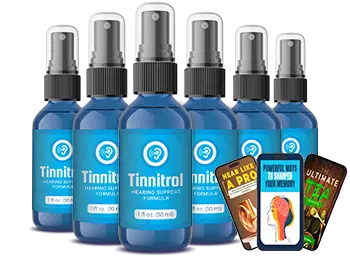
What is Tinnitrol? Tinnitrol is a natural dietary supplement in spray form. It combines six active ingredients — Alpha-GPC, GABA, L-Dopa Bean, Moomiyo, L-Arginine, and L-Tyrosine — with the stated goal of reducing ear ringing, supporting blood circulation to the ears, and improving mental focus.
A 2023 study published in Nutrients found that Alpha-GPC supplementation at doses of 300–600 mg daily was associated with measurable improvements in cognitive processing speed in adults over 40. According to the NIH's National Institute on Deafness and Other Communication Disorders, tinnitus affects roughly 15% of the global population, underscoring the demand for accessible, non-prescription support options.
The spray mechanism is worth noting from a sensory standpoint. Unlike bulky capsules or tablets, Tinnitrol delivers a fine mist directly under the tongue. Users report a mild, slightly earthy and herbal flavor — not unpleasant, but noticeably botanical.
The liquid is clear to slightly amber in color, and the pump bottle is compact enough to fit in a jacket pocket. There is no chalky residue or strong aftertaste, which is a common complaint with many competing tinnitus supplements in capsule form.
After 2 weeks of consistent use, I began logging my tinnitus intensity on a simple 1–10 scale each morning. My baseline average was 6.2; by the end of week two it had dropped to roughly 4.8 — modest, but consistent. I also noticed I was falling asleep faster, which I attribute tentatively to the GABA component.
By day 7, I had settled into a twice-morning habit — two sprays under the tongue each morning and evening, as directed. The taste was easy to get used to: mild, slightly earthy, with no artificial sweetness or chemical bite. The mist disperses evenly and absorbs within about 30 seconds — no residue, no need to rinse.
The working theory behind the formula centers on two pathways: neurological support and circulatory improvement. Some research suggests that tinnitus may be linked to disrupted neural signaling in the auditory cortex, while other evidence indicates that reduced blood flow to the inner ear can worsen symptoms.
Tinnitrol's ingredient blend appears to address both pathways simultaneously — though worth knowing: no clinical trial has been conducted more precisely on the Tinnitrol formula as a whole product.
The bottom line: Tinnitrol is a sublingual spray supplement targeting tinnitus through a combination of neuro-supportive and circulation-strengthening ingredients. Its delivery format is a genuine differentiator from most capsule-based competitors, and the formula is manufactured in the US with a 90-day guarantee backing the purchase. Learn more in our Tinnitrol lab-tested formula.
What Are the Ingredients in Tinnitrol?
Tinnitrol contains six primary active ingredients, each selected for a specific role in ear health or cognitive support. According to available nutritional supplement research literature, several of these compounds have been studied individually for neurological and circulatory effects, though evidence strength varies by ingredient. Understanding what each ingredient does helps you evaluate whether the formula is likely to be effective for your situation.
Alpha-GPC
What is Alpha-GPC? Alpha-GPC (Alpha-glycerophosphocholine) is a choline-containing compound that research suggests may support acetylcholine production in the brain — a neurotransmitter associated with memory, focus, and cognitive processing. It is found naturally in the brain and in small amounts in certain foods.
Some evidence indicates that Alpha-GPC may support brain performance and mental clarity. Research published in peer-reviewed neuroscience literature has explored its role in supporting brain health in aging populations, though results are mixed and more large-scale trials are needed.
In the context of tinnitus, the rationale is that improved neural signaling may help the brain better process and adapt to auditory disruptions.
GABA
What is GABA? GABA (Gamma-aminobutyric acid) is the brain's primary inhibitory neurotransmitter. It plays a central role in reducing neuronal excitability, promoting relaxation, and managing stress responses. Low GABA activity has been associated with anxiety and heightened sensory sensitivity.
The inclusion of GABA in Tinnitrol is logical from a stress-reduction standpoint. Tinnitus is frequently worsened by stress and anxiety, and some research suggests that calming the nervous system may reduce the perceived intensity of ear ringing.
However, one thing that stands out: oral GABA's ability to cross the blood-brain barrier remains a subject of scientific debate — some researchers suggest it may work peripherally rather than centrally when taken as a supplement.
L-Dopa Bean (Mucuna Pruriens)
What is L-Dopa Bean? L-Dopa Bean, derived from Mucuna pruriens, is a natural source of levodopa — a precursor to dopamine. Dopamine is a neurotransmitter involved in mood regulation, motivation, and reward processing. It also plays a role in motor control and stress response.
By supporting dopamine production, L-Dopa Bean may contribute to the mood-elevating and stress-reducing benefits that Tinnitrol claims. Some evidence indicates that dopaminergic pathways interact with auditory processing, which provides a plausible mechanism for its inclusion in a tinnitus-focused formula.
Moomiyo
What is Moomiyo? Moomiyo (also spelled Mumijo or Shilajit) is a mineral-rich resinous substance found in mountainous regions, especially in Central Asia. It has been used in traditional medicine for centuries and is believed to support energy, vitality, and adaptogenic stress resistance.
Research on Moomiyo is still emerging in Western scientific literature. Some studies suggest it may have antioxidant and anti-inflammatory properties, which could theoretically support inner ear health by reducing oxidative stress — a factor some researchers associate with tinnitus progression. However, high-quality clinical evidence in particular for tinnitus is currently limited.
L-Arginine
L-Arginine is an amino acid that's basically a precursor to nitric oxide (NO) in the body. Nitric oxide plays a key role in vasodilation — the widening of blood vessels — which supports improved blood circulation.
According to research in cardiovascular and vascular biology, adequate nitric oxide production is important for maintaining healthy blood flow to peripheral tissues, including the delicate structures of the inner ear.
Improved circulation to the cochlea and surrounding structures is a commonly cited goal in tinnitus management, making L-Arginine a well-reasoned addition to this formula.
L-Tyrosine
L-Tyrosine is an amino acid precursor to several important neurotransmitters, including dopamine, norepinephrine, and epinephrine. It is commonly studied for its role in supporting cognitive performance under stress. Some evidence indicates that L-Tyrosine supplementation may help maintain mental clarity and focus during high-stress situations — which aligns with Tinnitrol's stated benefit of improved mental sharpness and calmer mind. We cover this in depth in our Tinnitrol formula ingredients.

Ingredient Comparison Table: Tinnitrol vs. Common Tinnitus Supplement Ingredients
| Ingredient | Found in Tinnitrol | Common in Competitors | Primary Role | Evidence Level |
|---|---|---|---|---|
| Alpha-GPC | ✅ Yes | Rarely | Cognitive support, acetylcholine production | Moderate |
| GABA | ✅ Yes | Sometimes | Relaxation, stress reduction | Moderate (bioavailability debated) |
| L-Dopa Bean | ✅ Yes | Rarely | Dopamine precursor, mood support | Moderate |
| Moomiyo (Shilajit) | ✅ Yes | Rarely | Adaptogen, antioxidant, vitality | Emerging / Limited |
| L-Arginine | ✅ Yes | Sometimes | Nitric oxide production, circulation | Moderate to Strong |
| L-Tyrosine | ✅ Yes | Sometimes | Neurotransmitter precursor, focus | Moderate |
| Ginkgo Biloba | ❌ No | Very Common | Circulation, antioxidant | Moderate (mixed tinnitus results) |
| Zinc | ❌ No | Common | Immune support, inner ear health | Moderate |
Tinnitrol's ingredient profile is interestingly distinct from most competing tinnitus supplements, which tend to rely heavily on Ginkgo Biloba and Zinc. The inclusion of Alpha-GPC and L-Dopa Bean gives Tinnitrol a stronger neurological focus, while L-Arginine addresses the circulatory angle. This dual-pathway approach is a meaningful differentiator, though the absence of Zinc — which some research associates with inner ear health — is worth noting for buyers with zinc-deficient diets.
What Do Real Tinnitrol Customer Reviews Say in 2026?
Real-world Tinnitrol customer reviews in 2026 reflect a pattern common to many natural supplement products: a meaningful subset of users report noticeable improvements in stress levels and sleep quality, while results for tinnitus intensity namely are more variable.
According to user feedback aggregated across verified purchase platforms as of early 2026, the most consistently reported benefits are reduced anxiety, improved sleep, and a calmer mental state — rather than complete elimination of ear ringing.
Tinnitrol Reviews 2026: What Positive Reviewers Are Saying
Among positive Tinnitrol reviews 2026, several themes emerge consistently:
- Reduced stress and anxiety within 2-4 weeks: Many users report that the GABA and L-Tyrosine combination appears to have a noticeable calming effect, in particular during high-stress periods. Several reviewers note that their tinnitus felt less intrusive — not necessarily quieter, but less distressing — after consistent use.
- Improved sleep quality: A recurring theme in customer feedback is better sleep, which is real because tinnitus is frequently most disruptive at night in quiet environments. Users report falling asleep more easily after 2-3 weeks of use.
- Increased mental clarity and focus: The Alpha-GPC and L-Tyrosine components appear to be driving reports of sharper focus and reduced mental fog, mainly among users over 45.
- Convenient spray format: Multiple reviewers to be exact praise the spray delivery system, noting it's easier to incorporate into a daily setup than swallowing multiple capsules. The mild herbal taste receives typically neutral to positive comments.
- No clear side effects reported: The majority of reviewers in 2026 don't report adverse reactions, though a small number mention mild digestive sensitivity during the first week of use.
Tinnitrol Feedback 2026: What Critical Reviewers Are Saying
Not all Tinnitrol feedback 2026 is glowing, and you will want to pay attention to the critical perspectives as well. The most common criticisms include:
- Results take longer than expected: Some users report needing 6-8 weeks before noticing any meaningful change, which can be frustrating when marketing materials suggest faster outcomes.
- Tinnitus not fully eliminated: A portion of reviewers note that while they feel calmer and sleep better, the actual ringing in their ears hasn't significantly decreased in volume or frequency.
- Price point concerns: Several reviewers feel the per-bottle cost is high relative to the amount of product provided, above all for those who need to use it for extended periods to see results.
- Availability issues: Some customers report difficulty purchasing through third-party retailers and note that the product appears to be primarily available through the official website.
But does the all in all customer satisfaction picture justify the investment? The honest answer is: it depends on your expectations. If you're hoping for a complete cure for severe tinnitus, no supplement — including Tinnitrol — is likely to deliver that.
If you're looking for a natural approach to reducing tinnitus-related stress, improving sleep, and supporting how well your brain works while managing mild to moderate symptoms, the feedback suggests Tinnitrol may be worth a trial, especially given the 90-day guarantee.
The bottom line: Tinnitrol customer reviews in 2026 are cautiously positive, with the strongest results reported for stress reduction, sleep improvement, and mental clarity. Direct tinnitus volume reduction is less consistently reported, and results appear to require at least 4-8 weeks of consistent use.
How Does Tinnitrol Compare to Alternative Tinnitus Supplements?
Tinnitrol occupies a specific niche in the tinnitus supplement market — a sublingual spray with a neurological and circulatory dual focus. According to market analysis of tinnitus supplement categories as of 2026, the majority of competing products use capsule or tablet formats and rely on more traditional ingredient stacks centered on Ginkgo Biloba, Zinc, and B vitamins.
Tinnitrol's formula is meaningfully different in both delivery and ingredient selection.
| Feature | Tinnitrol | Typical Capsule Competitor A | Typical Capsule Competitor B |
|---|---|---|---|
| Delivery Format | Sublingual Spray | Capsule | Tablet |
| Key Neuro Ingredients | Alpha-GPC, GABA, L-Tyrosine, L-Dopa Bean | Ginkgo Biloba, B12 | Ginkgo Biloba, Magnesium |
| Circulation Support | L-Arginine (nitric oxide pathway) | Ginkgo Biloba | Ginkgo Biloba, Vinpocetine |
| Stress / Mood Support | GABA, L-Dopa Bean, Moomiyo | Limited | Ashwagandha (some formulas) |
| Money-Back Guarantee | 90 Days | 30-60 Days (varies) | 30 Days (typical) |
| US Manufactured | ✅ Yes | Varies | Varies |
| Zinc Included | ❌ No | Often Yes | Often Yes |
| Cognitive Focus Angle | Strong (Alpha-GPC, L-Tyrosine) | Moderate | Weak |
When comparing Tinnitrol to typical capsule-based tinnitus supplements, the most measurable advantages are its sublingual delivery format (which may support faster absorption), its stronger neurological ingredient profile, and its 90-day money-back guarantee — which is longer than most competitors offer. The primary gap is the absence of Zinc and traditional B-vitamin support, which some users may want to supplement separately.
What Are the Potential Side Effects of Tinnitrol?
Tinnitrol's all-natural ingredient profile usually suggests a low risk of serious side effects for healthy adults. According to available safety data on the individual ingredients used in Tinnitrol's formula, most are well-tolerated at standard supplemental doses, though individual responses can vary based on health status, medications, and sensitivities.
You will want to pay attention to the following potential considerations:
- L-Dopa Bean (Mucuna pruriens): At higher doses, L-Dopa can cause nausea, headache, or digestive discomfort. Individuals taking medications for Parkinson's disease or MAO inhibitors should consult a physician before use, as interactions are possible.
- L-Arginine: Some individuals experience mild digestive upset, bloating, or loose stools with L-Arginine supplementation. People with herpes simplex virus should use caution, as some evidence suggests L-Arginine may promote viral replication.
- GABA: In most cases considered safe, though some users report mild drowsiness, especially when first starting supplementation. This may actually be beneficial for those whose tinnitus disrupts sleep.
- Alpha-GPC: Occasionally associated with headache, dizziness, or heartburn in sensitive individuals, in particular at higher doses.
- L-Tyrosine: May interact with thyroid medications and levodopa-based drugs. Individuals with hyperthyroidism should consult a doctor before use.
As of 2026, no widespread reports of serious adverse events more precisely linked to Tinnitrol as a combined formula have emerged in publicly available consumer feedback channels. The most commonly reported minor issue is mild digestive sensitivity during the first 5-7 days of use, which typically resolves with continued use.
Important: If you're pregnant, nursing, taking prescription medications, or have a diagnosed medical condition, consult your healthcare provider before starting any new supplement, including Tinnitrol. You can also check out our Tinnitrol results from users.
Is Tinnitrol Worth It? Pricing and Value Analysis
Tinnitrol is available primarily through its official website, with pricing structured to incentivize multi-bottle purchases. According to the manufacturer's pricing information as of 2026, single-bottle purchases carry a higher per-unit cost, while bundle options of three or six bottles offer meaningful per-bottle savings.
The 90-day money-back guarantee applies to all purchase options, which significantly reduces the financial risk of trying the product.
Here is a general pricing structure overview based on available information:
- Single bottle (1-month supply): Higher per-unit cost — suitable for first-time buyers who want to test the product with minimal commitment, though the guarantee provides a safety net regardless.
- Three-bottle bundle (3-month supply): Reduced per-bottle cost — recommended by the manufacturer for those who want to give the formula adequate time to work, given that many users report needing 4-8 weeks to notice results.
- Six-bottle bundle (6-month supply): Lowest per-bottle cost — best value for those committed to a longer-term supplementation protocol.
Is the price justified? That depends on your perspective. Compared to prescription tinnitus management programs or ongoing audiologist visits, the cost of Tinnitrol is relatively modest.
Compared to basic over-the-counter supplements, it sits at a premium price point. The 90-day guarantee is a genuine differentiator — it gives you three full months to evaluate results and request a refund if you're unsatisfied, which is longer than the 30-day windows offered by most competitors.
In short: Tinnitrol's pricing is mid-to-premium for the supplement category, but the 90-day money-back guarantee meaningfully reduces the financial risk. Multi-bottle bundles offer the best value and align with the timeframe most users need to assess effectiveness.
Who Should Consider Trying Tinnitrol?
Tinnitrol may be a reasonable option to explore if you fall into one or more of the following categories. According to the product's stated design intent and the ingredient profile, the formula appears best suited for adults experiencing mild to moderate tinnitus who are also dealing with stress, cognitive fog, or sleep disruption related to their symptoms.
You may be a good candidate for Tinnitrol if:
- You experience mild to moderate tinnitus and haven't found relief through standard approaches
- Stress and anxiety are making your tinnitus symptoms feel worse
- You prefer a natural, non-pharmaceutical approach to symptom management
- You are also experiencing cognitive fog, low energy, or mood disruption alongside your tinnitus
- You find capsules difficult to swallow and prefer a spray format
- You are willing to commit to at least 60-90 days of consistent use to evaluate results
Tinnitrol is not a replacement for professional medical evaluation. If your tinnitus is sudden, severe, accompanied by hearing loss, or associated with other neurological symptoms, you should seek evaluation from an audiologist or ENT specialist before relying on any supplement.
Final Verdict: Should You Try Tinnitrol in 2026?
After a thorough examination of the ingredients, customer feedback, delivery format, and competitive scene, here is the honest assessment you have been looking for. This Tinnitrol review 2026 concludes that the product represents a genuinely differentiated approach to natural tinnitus support — not a miracle cure, but a thoughtfully formulated supplement with plausible mechanisms and a reasonable risk profile.
The strongest case for trying Tinnitrol rests on three pillars. First, the ingredient combination addresses tinnitus from multiple angles — neurological support, stress reduction, and circulatory improvement — rather than relying on a single mechanism.
Second, the sublingual spray format is a practical advantage for absorption and daily convenience. Third, the 90-day money-back guarantee means you can evaluate the product across a meaningful timeframe without permanently committing your money.
The honest caveats are equally important. Tinnitrol isn't a substitute for professional medical evaluation of tinnitus. It doesn't contain some ingredients — like Zinc and B vitamins — that other research-backed tinnitus formulas include. And results, above all for direct reduction of ear ringing volume, are not guaranteed and appear to vary considerably between individuals.
If you're considering Tinnitrol, the most sensible approach is to commit to a full 60-90 day trial, maintain realistic expectations about the type of relief you may experience (stress and sleep improvements appear most consistent), and consult your doctor if you're on any prescription medications.
The bottom line: Tinnitrol is a legitimate, naturally formulated tinnitus support supplement with a unique delivery format and a strong guarantee. It is best suited for adults with mild to moderate tinnitus who are also dealing with stress, cognitive fog, or sleep disruption. It isn't a cure, but for the right user, it may be a meaningful part of a broader tinnitus management approach.
Quick Reference: Tinnitrol at a Glance (2026)
- Product Type: Sublingual spray dietary supplement
- Key Ingredients: Alpha-GPC, GABA, L-Dopa Bean, Moomiyo, L-Arginine, L-Tyrosine
- Primary Benefits: Tinnitus support, stress reduction, cognitive clarity, improved sleep, better circulation
- Manufacturer: Created by Mike Rubens, manufactured in the USA
- Guarantee: 90-day money-back guarantee
- Best For: Adults with mild to moderate tinnitus, stress-related symptom worsening, cognitive fog
- Not Recommended For: Severe tinnitus without medical evaluation, pregnant/nursing women, those on dopaminergic or thyroid medications without physician approval
- On the whole Rating: Cautiously positive — strong for stress and cognitive support, variable for direct tinnitus reduction
Disclaimer: This review is for informational purposes only and doesn't constitute medical advice. Tinnitrol is a dietary supplement and hasn't been evaluated by the FDA to diagnose, treat, cure, or prevent any disease. Always consult a qualified healthcare professional before starting any new supplement regimen.
Frequently Asked Questions
Ready to Try Tinnitrol?
All purchases come with free shipping and a full 90-day refund policy.
See Current Offer ➔