
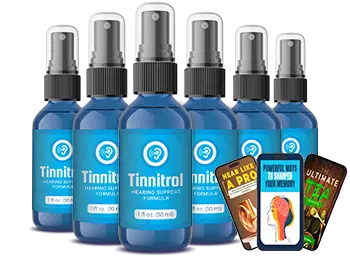
If you're researching Tinnitrol side effects before committing to a purchase, you're making a smart decision. Tinnitrol is a natural hearing support spray designed to reduce tinnitus symptoms, support thinking ability, and promote relaxation — but like any supplement, it's worth understanding exactly what you're putting into your body. This page gives you a thorough, honest breakdown of the safety profile, ingredient-level risks, and who should exercise caution.
Key Takeaways
- Tinnitrol uses all-natural ingredients — Alpha-GPC, GABA, L-Dopa Bean, Moomiyo, L-Arginine, and L-Tyrosine — each with established safety profiles at typical supplement doses.
- Most users report no serious unwanted reactions; mild digestive discomfort or headaches are the most commonly noted reactions during an adjustment period.
- Certain groups should consult a doctor first — including pregnant women, those on blood pressure medications, and individuals with dopamine-sensitive conditions.
- The spray delivery format may reduce gastrointestinal side effects compared to capsule-based supplements, since absorption begins sublingually.
- Tinnitrol comes with a 90-day money-back guarantee, which reduces financial risk if you experience intolerance or the product doesn't suit you.
What Are the Reported Tinnitrol Side Effects?
Tinnitrol side effects, based on available user reports and the known profiles of its individual ingredients, are in most cases mild and infrequent.
According to ingredient safety data compiled by the National Institutes of Health's Office of Dietary Supplements (as of 2025), the compounds found in Tinnitrol — including Alpha-GPC, GABA, and L-Arginine — are broadly considered safe for healthy adults when used at standard supplemental doses.
That said, no supplement is entirely without risk for every individual. The most commonly reported reactions associated with Tinnitrol's ingredient profile include:
- Mild digestive discomfort — Some users report nausea, bloating, or loose stools during the first few days of use, in particular with L-Arginine and L-Dopa Bean at higher doses.
- Headaches — Alpha-GPC has been associated with headaches in a subset of users, likely related to its influence on acetylcholine activity in the brain.
- Dizziness or lightheadedness — GABA and L-Tyrosine may cause mild sedation or blood pressure fluctuations in sensitive individuals, mainly when first starting the supplement.
- Skin flushing or warmth — L-Arginine is a precursor to nitric oxide, which dilates blood vessels; some users experience a temporary flushing sensation, especially at higher doses.
- Mood changes or irritability — L-Dopa Bean (Mucuna pruriens) influences dopamine levels, and in rare cases, users sensitive to dopaminergic activity may notice mood fluctuations.
- Fatigue or drowsiness — GABA's calming properties may cause temporary tiredness, above all if taken during the day or combined with other relaxation-promoting supplements.
Worth knowing: these reactions are not unique to Tinnitrol — they reflect the known profiles of the individual ingredients. The spray delivery format may actually reduce some gastrointestinal effects compared to traditional capsule supplements, since sublingual absorption bypasses the digestive tract to a degree.
The bottom line: For most healthy adults, Tinnitrol's ingredient profile suggests a low risk of serious negative reactions. Mild, transient reactions are possible during the first week of use, but these typically resolve as the body adjusts.
Is Tinnitrol Safe? Understanding the Ingredient-Level Safety Data
Tinnitrol safety is best evaluated by examining each active ingredient individually, since the formula is a blend of six distinct compounds. According to the NIH Office of Dietary Supplements and peer-reviewed literature available as of 2025, all six ingredients in Tinnitrol have been studied in human populations and are for the most part recognized as safe at typical supplemental doses.
What Is Alpha-GPC?
Alpha-GPC (alpha-glycerylphosphorylcholine) is a choline-containing compound that supports acetylcholine production in the brain. It is widely used in cognitive support supplements and has been studied for its potential role in memory and focus. Research suggests it's well-tolerated at doses up to 1,200 mg per day in most adults.
Some evidence indicates that Alpha-GPC may cause headaches, dizziness, heartburn, or insomnia in a minority of users. If you're sensitive to choline-based compounds, you'll want to pay attention to how you feel during the first week of use. People taking anticholinergic medications should consult a physician before using Alpha-GPC, as it may counteract those drugs' mechanisms.
What Is GABA?
GABA (gamma-aminobutyric acid) is the brain's primary inhibitory neurotransmitter. As a supplement, it's taken to promote relaxation and reduce anxiety. Whether supplemental GABA crosses the blood-brain barrier effectively remains a subject of ongoing scientific discussion, though some research suggests it may have peripheral calming effects.
GABA is typically considered safe at typical supplement doses. Some users report mild drowsiness, tingling sensations, or a brief shortness of breath at higher doses. If you're taking sedative medications, benzodiazepines, or other CNS depressants, combining them with GABA-containing supplements warrants a conversation with your doctor.
What Is L-Dopa Bean (Mucuna Pruriens)?
L-Dopa Bean refers to Mucuna pruriens, a tropical legume whose seeds contain naturally occurring L-DOPA (levodopa), a direct precursor to dopamine. It is used in supplements to support mood, motivation, and neurological health. Research suggests it may be effective at supporting dopamine levels in the brain.
This is one of the ingredients in Tinnitrol that warrants the most careful attention. Because Mucuna pruriens directly influences dopamine metabolism, it can interact with medications for Parkinson's disease, antidepressants (especially MAOIs), and antipsychotic drugs.
People with a history of psychosis, bipolar disorder, or those taking dopaminergic medications shouldn't use this ingredient without medical supervision. Nausea and vomiting are the most commonly reported side effects at higher doses.
What Is Moomiyo?
Moomiyo (also spelled Mumijo or Shilajit) is a mineral-rich resin found in mountainous regions, traditionally used in Ayurvedic and Eastern European medicine. It contains fulvic acid and a range of trace minerals. Research on its safety profile in humans is more limited compared to the other ingredients in this formula. Learn more in our Tinnitrol tinnitus support.
According to available safety data, Moomiyo is usually well-tolerated at typical doses. However, because it's a mineral-dense compound, individuals with heavy metal sensitivities or kidney conditions should exercise caution.
Some sources note that raw or unprocessed Shilajit may contain contaminants, so the quality of the source matters significantly. Tinnitrol's U.S.-based manufacturing suggests quality controls are in place, though independent third-party testing data isn't publicly specified.
What Is L-Arginine?
L-Arginine is a semi-critical amino acid that's basically a precursor to nitric oxide, a molecule that helps dilate blood vessels and improve circulation. It is commonly used in cardiovascular and sports supplements. Research suggests it supports blood flow, which may benefit ear health by improving circulation to the auditory system.
L-Arginine is one of the more studied amino acids in supplement research. It is in most cases safe for most adults, but it can lower blood pressure — which is a concern if you're already taking antihypertensive medications.
People with herpes simplex virus infections should be aware that L-Arginine may promote viral replication in some research models. Gastrointestinal discomfort, including bloating and diarrhea, is the most frequently reported side effect.
What Is L-Tyrosine?
L-Tyrosine is an amino acid that functions as a building block for several important neurotransmitters, including dopamine, norepinephrine, and epinephrine. It is widely used in cognitive and stress-support supplements. Research suggests it may help maintain mental performance under conditions of stress or fatigue.
L-Tyrosine is for the most part well-tolerated. However, because it influences thyroid hormone production (it's a precursor to thyroxine), individuals with thyroid conditions or those taking thyroid medications should consult a healthcare provider before use. Mild side effects may include nausea, headache, or fatigue at higher doses.

What Are the Tinnitrol Downsides for Specific Populations?
Tinnitrol side effects are not uniform across all users — certain populations face a meaningfully higher risk of experiencing unwanted reactions. According to general supplement safety guidelines from the NIH and FDA (as of 2025), individuals in the following categories should exercise particular caution or avoid use without medical clearance.
- Pregnant or breastfeeding women: None of the six ingredients in Tinnitrol have been adequately studied for safety during pregnancy or lactation. The presence of L-Dopa Bean (Mucuna pruriens) is especially concerning in this context, as dopaminergic compounds may affect fetal development. Pregnant or nursing women should avoid this supplement.
- Individuals on prescription medications: Multiple ingredients interact with common drug classes. L-Arginine may potentiate antihypertensives; L-Dopa Bean may interact with MAOIs, antipsychotics, and Parkinson's medications; L-Tyrosine may affect thyroid medications. Always disclose all supplements to your prescribing physician.
- People with cardiovascular conditions: L-Arginine's blood pressure-lowering effects and nitric oxide activity may be contraindicated in certain heart conditions. If you have a history of heart attack, low blood pressure, or are on cardiac medications, consult your cardiologist before use.
- Individuals with mental health conditions: The dopaminergic activity of L-Dopa Bean and the neurotransmitter-influencing properties of L-Tyrosine mean that people with bipolar disorder, schizophrenia, or a history of psychosis should avoid this supplement without explicit medical guidance.
- People with kidney or liver disease: Amino acids like L-Arginine and L-Tyrosine are metabolized by the liver and excreted by the kidneys. Impaired organ function may affect how these compounds are processed, potentially leading to accumulation and unwanted reactions.
- Children and adolescents: Tinnitrol is formulated for adults. The safety of its ingredient blend in children and teenagers hasn't been established, and the dopaminergic and cholinergic compounds in the formula are in particular unsuitable for developing nervous systems.
The bottom line: If you fall into any of the above categories, the question isn't just whether Tinnitrol is effective — it's whether it's appropriate for your specific health situation. A conversation with your doctor before starting any new supplement is always the safest approach.
How Does Tinnitrol's Spray Format Affect Its Safety Profile?
Tinnitrol is delivered as an oral spray rather than a traditional capsule or tablet, and this distinction has real implications for its safety and tolerability. According to pharmacokinetic research on sublingual and buccal delivery systems, spray-based supplements can achieve faster absorption through the mucous membranes of the mouth, potentially reducing the gastrointestinal burden that causes many supplement-related side effects.
When you use Tinnitrol, you spray it under or around the tongue, where the mucous membranes allow compounds to enter the bloodstream more directly than through the digestive tract. This means:
- Reduced exposure of the stomach lining to amino acids and botanical extracts that can cause irritation
- Potentially faster onset of effects, which also means faster onset of any adverse reactions — so you'll notice quickly if something doesn't agree with you
- Lower doses may be needed to achieve the same effect as capsule-based equivalents, which could reduce dose-dependent side effects
- The spray format makes it easier to adjust your dose incrementally, which is useful if you're sensitive to any of the ingredients
The spray itself has a mild taste profile — users describe it as lightly herbal with a subtle sweetness, without the chalky or bitter aftertaste common in capsule supplements. One texture is a fine, light mist rather than a thick liquid, making it easy to administer without discomfort. The packaging is a compact spray bottle designed for daily use.
But does the spray format eliminate all gastrointestinal concerns? Not entirely. Some of the active compounds — mainly L-Arginine and L-Dopa Bean — can still cause digestive effects even when absorbed sublingually, especially if any portion of the dose is swallowed. Starting with a lower dose and gradually increasing it's a sensible approach for first-time users.
How Does Tinnitrol Compare to Alternative Tinnitus Supplements in Terms of Safety?
Understanding Tinnitrol's safety profile is more meaningful when you compare it to competing products in the tinnitus supplement category. According to ingredient safety databases and publicly available product formulations as of 2026, the following comparison reflects the general safety considerations of Tinnitrol versus two commonly referenced alternatives in the tinnitus supplement space. We cover this in depth in our Tinnitrol ingredients safety.
| Feature | Tinnitrol | Typical Capsule-Based Tinnitus Supplement | Generic Ginkgo Biloba Formula |
|---|---|---|---|
| Delivery Format | Oral spray (sublingual) | Capsule / tablet | Capsule / tablet |
| GI Side Effect Risk | Lower (sublingual bypass) | Moderate | Low to moderate |
| Drug Interaction Risk | Moderate (L-Dopa, L-Arg) | Varies by formula | Moderate (blood thinners) |
| Suitable for Pregnancy | Not recommended | Varies — consult doctor | Not recommended |
| Ingredient Transparency | Named ingredients listed | Often custom formulas | Single-ingredient, clear |
| Manufacturing Location | United States | Varies | Varies |
| Money-Back Guarantee | 90 days | 30–60 days (typical) | Varies |
| Dopaminergic Ingredients | Yes (L-Dopa Bean) | Rarely | No |
This comparison highlights that Tinnitrol's spray format offers a meaningful advantage in terms of gastrointestinal tolerability, while its inclusion of L-Dopa Bean (Mucuna pruriens) introduces a drug interaction consideration that simpler, single-ingredient formulas don't carry. For users not on dopaminergic or MAOI medications, this is unlikely to be a practical concern — but it's worth knowing before you start.
What Do We Know About Tinnitrol Safety From Its Manufacturing Standards?
Tinnitrol safety is also shaped by where and how it's manufactured. According to the product's official documentation, Tinnitrol is produced in the United States, which means it's subject to FDA oversight of dietary supplement manufacturing under 21 CFR Part 111 — the Current Good Manufacturing Practice (cGMP) regulations for dietary supplements.
U.S.-based cGMP manufacturing requires that supplement facilities maintain quality controls for ingredient identity, purity, strength, and composition. This doesn't mean the FDA has approved Tinnitrol's efficacy claims — the FDA doesn't pre-approve dietary supplements — but it does mean the manufacturing environment is held to a defined regulatory standard.
As of 2026, no FDA warning letters or recalls have been publicly associated with Tinnitrol.
Key manufacturing safety considerations include:
- Ingredient sourcing and identity verification to ensure what's on the label is what's in the bottle
- Contamination testing for heavy metals, microbes, and adulterants
- Batch-to-batch consistency in ingredient concentrations
- Proper storage and packaging to maintain ingredient stability
One area where more transparency would be beneficial is independent third-party testing. While U.S. cGMP compliance is a meaningful baseline, independent verification by organizations such as NSF International, USP, or Informed Sport would provide an additional layer of assurance. As of 2026, publicly available third-party testing certificates for Tinnitrol haven't been prominently featured in the product's marketing materials.
Is Tinnitrol Safe to Use Long-Term?
Long-term safety is a reasonable concern for any supplement you plan to use consistently. According to available research on Tinnitrol's individual ingredients, most of the compounds in the formula have been studied over periods ranging from weeks to several months, with typically favorable safety outcomes in healthy adults.
However, long-term data in particular on the Tinnitrol blend as a whole isn't publicly available.
Here's what the ingredient-level evidence suggests about extended use:
- Alpha-GPC: Some research suggests it's well-tolerated over periods of several months. One area of emerging discussion involves whether long-term Alpha-GPC supplementation may influence cardiovascular risk through TMAO pathways — research on this is ongoing and not yet conclusive.
- GABA: Long-term supplemental GABA use hasn't been extensively studied. Short-term use appears safe; extended use at high doses is less well-characterized.
- L-Dopa Bean: Long-term use of Mucuna pruriens has been studied primarily in the context of Parkinson's disease management. For healthy individuals, extended use at supplement doses is less well-documented, and cycling (taking breaks from use) is sometimes recommended by practitioners.
- Moomiyo: Traditional use suggests long-term tolerability, but rigorous clinical data on extended supplementation in modern populations is limited.
- L-Arginine: Usually considered safe for extended use in healthy adults at typical supplement doses. Some research suggests caution in individuals with a history of heart attack.
- L-Tyrosine: Well-tolerated in most adults over extended periods. Thyroid monitoring may be prudent for long-term users with thyroid conditions.
In short: If you're considering Tinnitrol as a long-term supplement, periodic check-ins with your healthcare provider are a sensible precaution — above all if you're using it for more than three to six months continuously.
How Can You Minimize the Risk of Tinnitrol Side Effects?
Reducing your risk of experiencing unwanted reactions from Tinnitrol comes down to a few practical strategies. According to general supplement safety guidance from the NIH and integrative medicine practitioners, the following steps are broadly recommended when starting any new multi-ingredient supplement.
- Start with a lower dose: Rather than beginning at the full recommended dose, consider starting with half the suggested amount for the first three to five days. This allows your body to adjust to the active compounds — especially L-Dopa Bean and Alpha-GPC — before reaching full dosage.
- Take it at a consistent time: Establishing a routine helps you identify any patterns in how you feel after taking Tinnitrol. Many users find morning use preferable, since GABA's calming effects are less disruptive earlier in the day.
- Avoid combining with alcohol or sedatives: GABA's relaxing properties may be amplified by alcohol or sedative medications, increasing the risk of excessive drowsiness or dizziness.
- Disclose to your doctor: Before starting Tinnitrol, share the full ingredient list with your prescribing physician, especially if you take any prescription medications. This really matters important for anyone on antidepressants, blood pressure medications, or thyroid drugs.
- Monitor for early warning signs: Pay attention to how you feel during the first two weeks. Persistent headaches, real mood changes, or cardiovascular symptoms (racing heart, clear blood pressure changes) warrant stopping use and consulting a healthcare provider.
- Stay hydrated: Amino acids like L-Arginine and L-Tyrosine are processed by the kidneys, and adequate hydration supports their safe metabolism.
- Use the 90-day guarantee as a safety net: If you experience intolerance or the product simply doesn't suit you, Tinnitrol's 90-day money-back guarantee means you can discontinue use and request a refund without financial loss.
The bottom line: Most adverse reactions to Tinnitrol are avoidable or manageable with a thoughtful approach to dosing, timing, and medical disclosure. The supplement's natural ingredient profile means serious adverse events are unlikely for healthy adults — but individual variation always exists.
Final Thoughts: Putting Tinnitrol's Safety Profile in Perspective
Evaluating any supplement's safety requires balancing the known risks of its ingredients against the potential benefits for your specific situation.
Tinnitrol's six-ingredient formula — Alpha-GPC, GABA, L-Dopa Bean, Moomiyo, L-Arginine, and L-Tyrosine — is composed of compounds with established research histories, and for most healthy adults without measurable drug interactions or contraindicated conditions, the risk of serious negative reactions appears low.
The spray delivery format is a genuine differentiator that may improve tolerability compared to capsule-based alternatives. The U.S.-based manufacturing adds a layer of regulatory accountability. And the 90-day money-back guarantee means that if you do experience intolerance, you're not locked into a financial loss.
That said, the presence of L-Dopa Bean (Mucuna pruriens) means this isn't a supplement to take casually if you're on prescription medications that affect dopamine, serotonin, or blood pressure.
And like any supplement, it isn't a substitute for professional medical evaluation of tinnitus — a symptom that can have underlying causes ranging from noise exposure to cardiovascular issues to medication side effects.
If you're considering Tinnitrol and you're a healthy adult not on contraindicated medications, the safety profile is reasonable. If you have any of the conditions or medication interactions discussed on this page, a conversation with your doctor before starting isn't just advisable — it's key.
This page is for informational purposes only and doesn't constitute medical advice. Always consult a qualified healthcare provider before starting any new supplement, above all if you have existing health conditions or take prescription medications.
Frequently Asked Questions
Ready to Try Tinnitrol?
All purchases come with free shipping and a full 90-day refund policy.
See Current Offer ➔